














MRP Driven Requirements
Having the MRP system drive the material requirements is why a company buys the system! It is a culture change for companies to accept the new way of "doing business". I've had presidents of companies tell me "I'm not going to have any system tell me what I need!". Fact is, if you don't have top management commitment for this project it's in for a long haul and almost surly doomed to failure!
Having senior management committed to the project is paramount to the success of any MRP implementation or re-implementation. Senior level education is required so they understand what is required and more important, commit the resources.There is no magic to making an MRP system work and yield the benefits expected. Most companies work pretty much the same way. They get customer orders, buy material, assemble the components then sell them. When a company get large enough to automate the ordering process a lot of things need to be addressed prior to
"turning on the switch".
In general, MRP systems are usually far ahead of the
education and training of the people who are assigned to install and use them.
In fact, there can be so many problems with the installation that people even
question if the tool would work for the average company.
The company using an MRP system should have procedures
in place to perform as expected. The MRP system only knows four things,
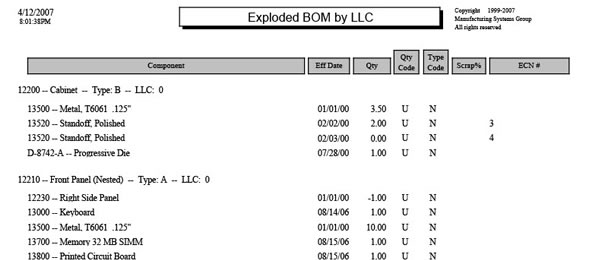
part numbers, dates, bills of materials and on-hand inventory
stock.
If their is an order for a part and it doesn't have any on-hand the system
will generate a manufacturing planned order to build one and have it ready on a certain
date. Master Scheduled parts are considered firm orders.
The system will then look through the bill of materials and calculate
component
requirements from the bill. It will again review inventories and generate
purchasing planned orders for the parts needed and specify the due date for
the
receipt. Again it's part numbers and dates!
There are three absolute requirements for any MRP system to function
correctly. They are:
- Accurate inventory quantities
- Correct bill of materials and
- Realistic customer or Master Schedule due dates
If the inventory is not correct the system will either not order what is needed or order too much. If the bill of materials is incorrect the same scenario will apply. If items are missing the MRP system doesn't know to order. The third item is having realistic ship dates.
If you add up all the lead times required to purchase the material, assemble and test then package for shipment you have the overall lead time assuming no material in house. If ship dates are constantly too short, purchasing is scrambling and expediting orders, the shop floor is constantly changing priorities and QC is pressured to test and "ship it".
Once the decision has been made to start using an MRP system many things need to happen to get ready. We recommend an MRP audit that will yield a "state-of-union" of the current operation. The Audit will establish a bench mark for future planning. Next is the readiness assessment and estimates of resources and manpower requirements. Once done the entire plan must be presented to top management for approval of financial cost, manpower requirements and schedule for this worth while project. All this while still putting product out the door!Click here for more information on MRP implementation.
To inquire about
MRP driven requirements please
contact us at:
Phone: 727 642-4677
E-mail: rmapes@mfgsysgroup.com